How Alcohol Affects Weight Loss and Muscle Building
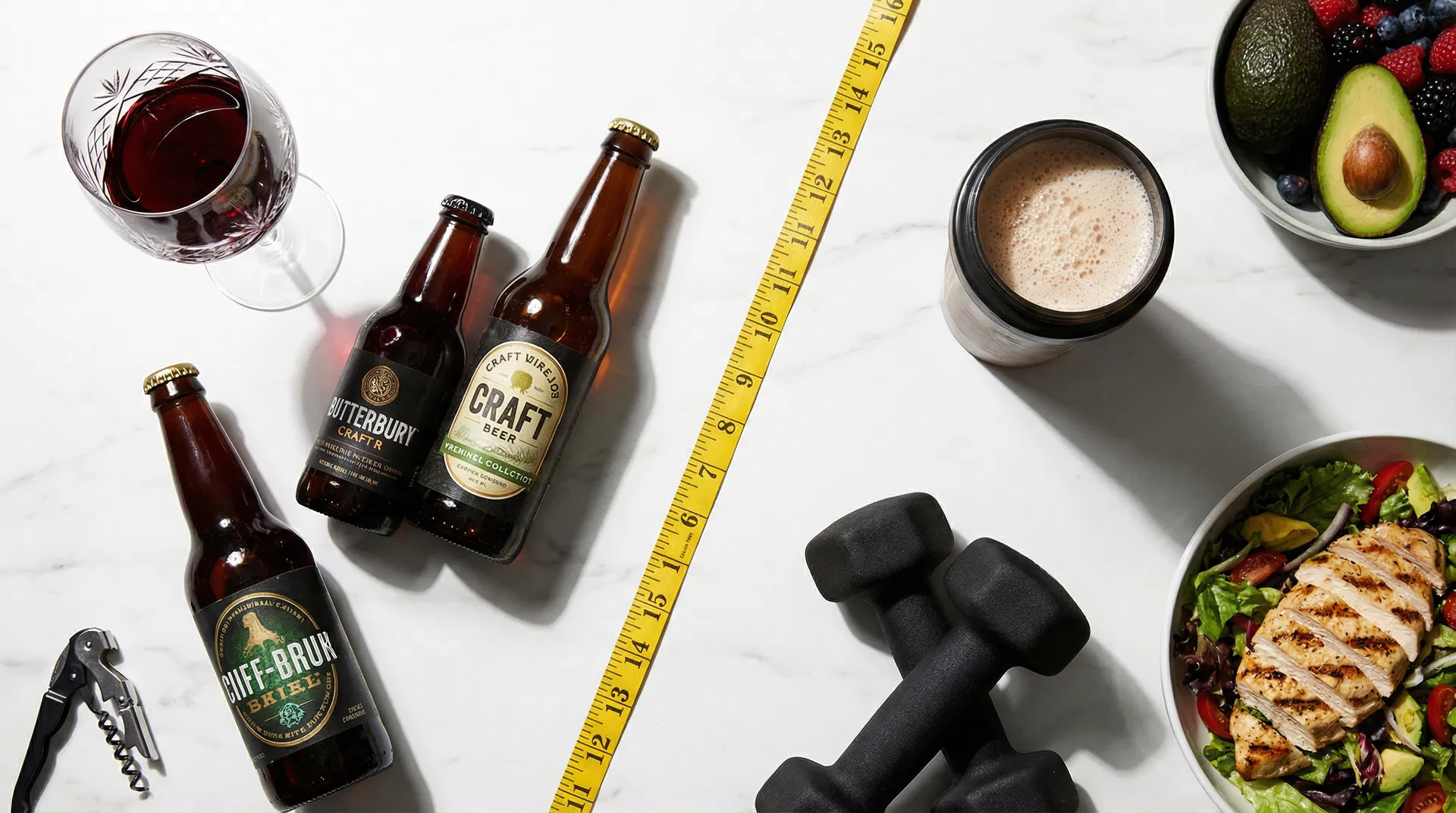
Most people know alcohol isn't great for weight loss — but the mechanisms are more complex and more damaging than most realize. Here's the full picture on alcohol, metabolism, and body composition.
Alcohol is the most socially accepted drug in America, and it's also one of the most significant hidden barriers to weight loss and muscle building. Understanding exactly how it affects your body — beyond "empty calories" — can be the difference between spinning your wheels and making real progress.
The Metabolic Priority Problem
Your body can't store alcohol as fat directly. Instead, it treats alcohol as a toxin and prioritizes metabolizing it above everything else. While your liver is processing alcohol (at roughly 1 drink per hour), it essentially pauses fat burning.
This is the core problem: every hour your body is processing alcohol is an hour it's not burning fat. For someone who has 3–4 drinks on a Friday night, that's 3–4 hours of suspended fat metabolism — plus the recovery time the next day.
The Hormonal Cascade
Alcohol disrupts multiple hormones critical to body composition:
- Testosterone: Even moderate drinking (2–3 drinks) reduces testosterone levels by 6.8% for up to 24 hours. Testosterone is essential for muscle building and fat loss.
- Growth Hormone: Alcohol suppresses growth hormone release by up to 70% during sleep. GH is responsible for muscle repair and fat metabolism overnight.
- Cortisol: Alcohol elevates cortisol, promoting fat storage (especially abdominal) and muscle breakdown.
- Insulin: Alcohol causes blood sugar dysregulation, promoting insulin spikes and fat storage.
The Muscle Building Problem
Muscle protein synthesis (MPS) — the process of building new muscle tissue — is significantly impaired by alcohol:
- A 2014 study found that alcohol consumption after resistance training reduced MPS by 37%
- Even when protein was consumed alongside alcohol, MPS was still reduced by 24%
- The effect lasted for at least 8 hours post-consumption
This means that if you train hard and then drink that evening, you're significantly undermining the gains from your workout.
Practical Guidance
This isn't about abstinence — it's about strategy:
- Timing matters: Drinking on non-training days is less damaging than drinking after workouts
- Hydration: Alcohol is a diuretic. Match every drink with a glass of water.
- Protein: Eating adequate protein with alcohol reduces some (not all) of the MPS impairment
- Sleep: Alcohol disrupts sleep architecture even when it helps you fall asleep faster. Poor sleep compounds all the hormonal effects.
- Frequency over quantity: Frequent moderate drinking is more damaging to body composition than occasional heavier drinking
The bottom line: if body composition is a priority, alcohol is a significant variable. Understanding the mechanisms helps you make informed choices rather than just feeling guilty.
Found this helpful?
Share it with someone who needs to read it.
Ready to experience the difference?
Book your first session at Body Techs Wellness & Esthetics in Minnetonka, MN.
Book Now