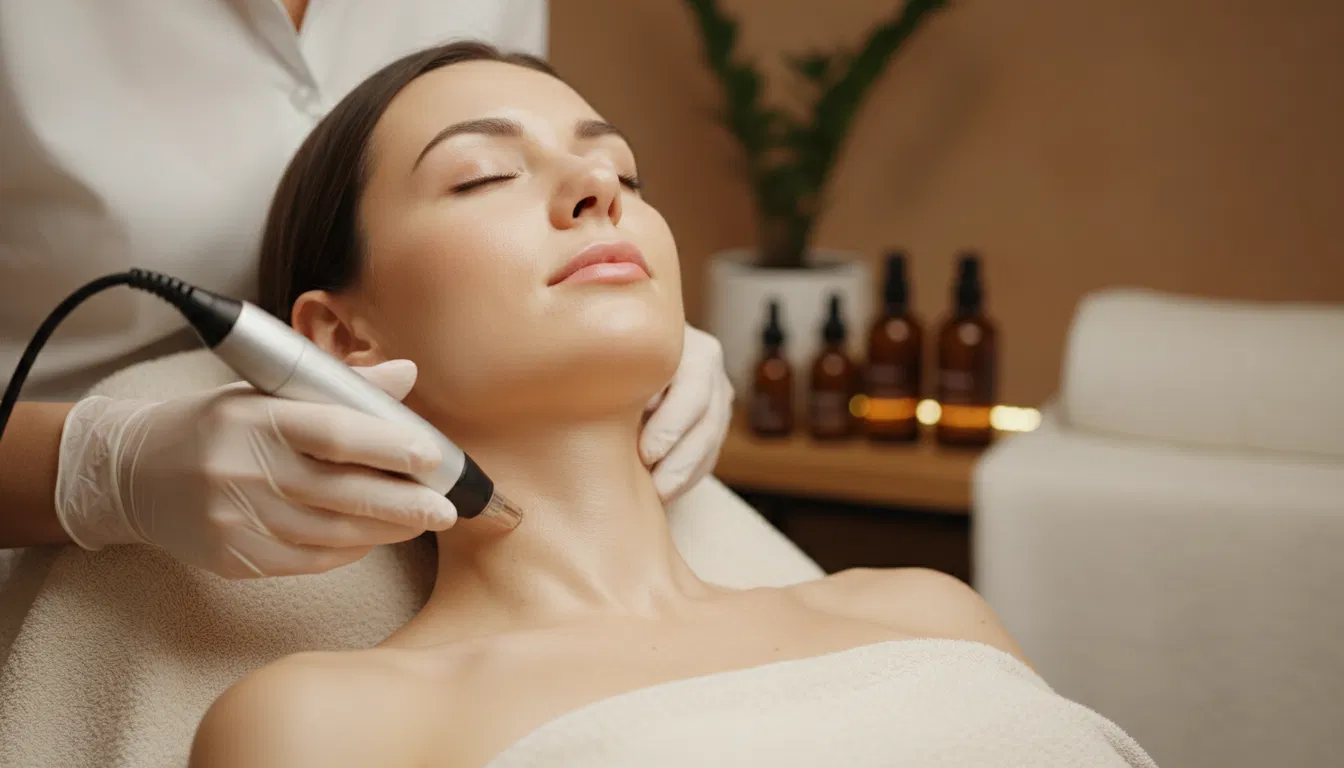
Microneedling Beyond the Face: Neck, Décolletage, Hands, and Body
Most people don't realize microneedling works just as well on the neck, chest, hands, and body as it does on the face. Here's what it treats in each area — and why treating your face without addressing the neck and décolletage is one of the most common esthetics mistakes.
When people think about microneedling, they picture the face. That's where most of the before-and-after photos live, and it's where the treatment is most commonly marketed. But the same collagen induction mechanism that transforms facial skin works everywhere on the body — and some of the most dramatic results we see at Body Techs come from treating areas that most people don't even know microneedling can reach.
Why the Neck and Décolletage Are Overlooked — and Shouldn't Be
Here's a pattern we see regularly: a client invests in a series of facial microneedling sessions, achieves real improvement in skin texture and firmness on their face, and then looks in the mirror and notices the disconnect. The face looks refreshed. The neck and chest — which have been exposed to the same sun, the same aging process, and the same gravity — haven't kept pace.
The neck and décolletage are among the first places the skin shows age, and they're among the most neglected in most skincare routines. The skin in these areas is thinner than facial skin, has fewer sebaceous glands (which means less natural moisture), and is constantly subjected to movement, sun exposure, and the mechanical stress of looking down at phones and screens for hours every day.
The result is a predictable set of concerns: horizontal neck lines (sometimes called "tech neck" lines), vertical chest wrinkles that deepen when the skin is compressed during sleep, crepey texture on the upper chest, and loss of firmness along the jawline and into the neck.
Finding this useful?
Share it with someone who needs to read it.
Microneedling addresses all of these by the same mechanism it uses on the face — controlled micro-injury triggers collagen and elastin production in the dermis, gradually thickening and firming the skin from below. The treatment is adapted slightly for these areas: needle depth is typically shallower on the neck than on the cheeks, and the technique is adjusted for the contours of the chest. But the results are real and measurable.
For clients who are treating both the face and the neck and décolletage together, we can often address all three areas in a single session, making the treatment efficient and ensuring that the results develop in harmony rather than creating a visible line between treated and untreated skin.
Hands: The Area That Gives Away Your Age
The hands are another area where microneedling produces results that genuinely surprise clients. The skin on the backs of the hands thins significantly with age, losing the subcutaneous fat and collagen that gives young hands their smooth, full appearance. Veins and tendons become more prominent. Age spots accumulate from years of sun exposure. The skin takes on a crepey, loose quality that no hand cream can reverse.
Microneedling on the hands stimulates collagen production in the dermis, gradually improving skin thickness and texture. Combined with brightening serums applied immediately after treatment — which penetrate deeply through the open micro-channels — it can also address hyperpigmentation and age spots effectively. Most clients need three to four sessions to see meaningful improvement, with maintenance sessions every few months after that.
Stretch Marks: What Microneedling Can and Can't Do
Stretch marks are one of the most common reasons people ask about body microneedling, and it's worth being honest about what the treatment can realistically achieve.
Stretch marks form when the skin is stretched rapidly — during pregnancy, growth spurts, rapid weight gain or loss, or muscle building — and the dermis tears. The resulting scar tissue is different in structure from normal skin: it lacks the organized collagen matrix that gives healthy skin its texture and color, which is why stretch marks appear as lighter, smoother, slightly indented lines against the surrounding skin.
Microneedling works on stretch marks by the same mechanism it works on acne scars: the controlled injury triggers a healing response that gradually replaces the disorganized scar tissue with new, more normally structured collagen. Over a series of treatments, stretch marks typically become less deep, less wide, and closer in color to the surrounding skin. They don't disappear entirely — nothing non-surgical will fully eliminate a stretch mark — but the improvement can be significant enough that they become much less visible.
The best results come from treating stretch marks that are still relatively new (pink or red rather than white and fully mature) and from committing to a full series of sessions rather than stopping after one or two. Older, fully mature white stretch marks are more resistant but still show improvement with consistent treatment.
Surgical Scars and Other Body Applications
Microneedling is also effective on surgical scars, including C-section scars, that have fully healed. The same collagen remodeling process that improves acne scars applies to any scar tissue — the treatment gradually breaks down the dense, disorganized collagen in the scar and replaces it with more normally structured tissue, improving both the appearance and the texture of the scar over time.
Other body areas that respond well to microneedling include the upper arms (for crepey skin texture and keratosis pilaris), the abdomen (for loose skin after weight loss or pregnancy), and the knees and elbows (for rough, thickened skin).
The Same Post-Treatment Protocol Applies — Including the Cryo Facial
Everything we do for facial microneedling recovery applies to body microneedling as well. Red light therapy is included with every session, applied immediately after treatment to accelerate the healing response and boost collagen synthesis. The combination of microneedling and red light therapy produces consistently better results than either treatment alone — more collagen, faster healing, less post-treatment inflammation.
For body areas, the Cryo Facial the following day is replaced with targeted cryo application to the treated area where possible — the same principle applies. The dry cold of nitrogen vapor reduces inflammation, calms the skin, and accelerates recovery without any physical contact that could irritate the freshly treated skin.
What to Expect from Body Microneedling
The treatment experience for body areas is similar to facial microneedling: topical numbing cream is applied 30 minutes before the session, the treatment itself takes 20–45 minutes depending on the area and size, and the skin will be flushed and sensitive for 24–48 hours afterward. Needle depth is calibrated for each body area — deeper on thicker skin like the abdomen, shallower on thinner areas like the neck.
Results build over four to six weeks as collagen remodeling progresses, with the most significant changes visible after a full series of three to six sessions. Maintenance sessions every three to four months keep the improvements active.
Combining Face and Body in a Treatment Plan
One of the advantages of working with a full esthetics facility is the ability to build a comprehensive treatment plan that addresses multiple areas in a coordinated way. Many of our clients start with facial microneedling, see results they're happy with, and then expand their treatment plan to include the neck, décolletage, or other body areas. We can often treat multiple areas in a single session, making the process efficient and ensuring that the results develop together rather than in isolation.
If you've been thinking about microneedling but assumed it was only for the face, come in for a consultation. We'll assess the specific areas you're concerned about, give you a realistic picture of what microneedling can achieve, and build a treatment plan that makes sense for your goals and your schedule.
Body Techs Wellness & Esthetics · 11353 MN-7, Minnetonka, MN 55305 · bodytechsrx.com
Found this helpful?
Share it with someone who needs to read it.
Ready to experience the difference?
Book your first session at Body Techs Wellness & Esthetics in Minnetonka, MN.
Book Now
Microneedling for Your Face: What to Expect, How It Works, and Why It Actually Delivers
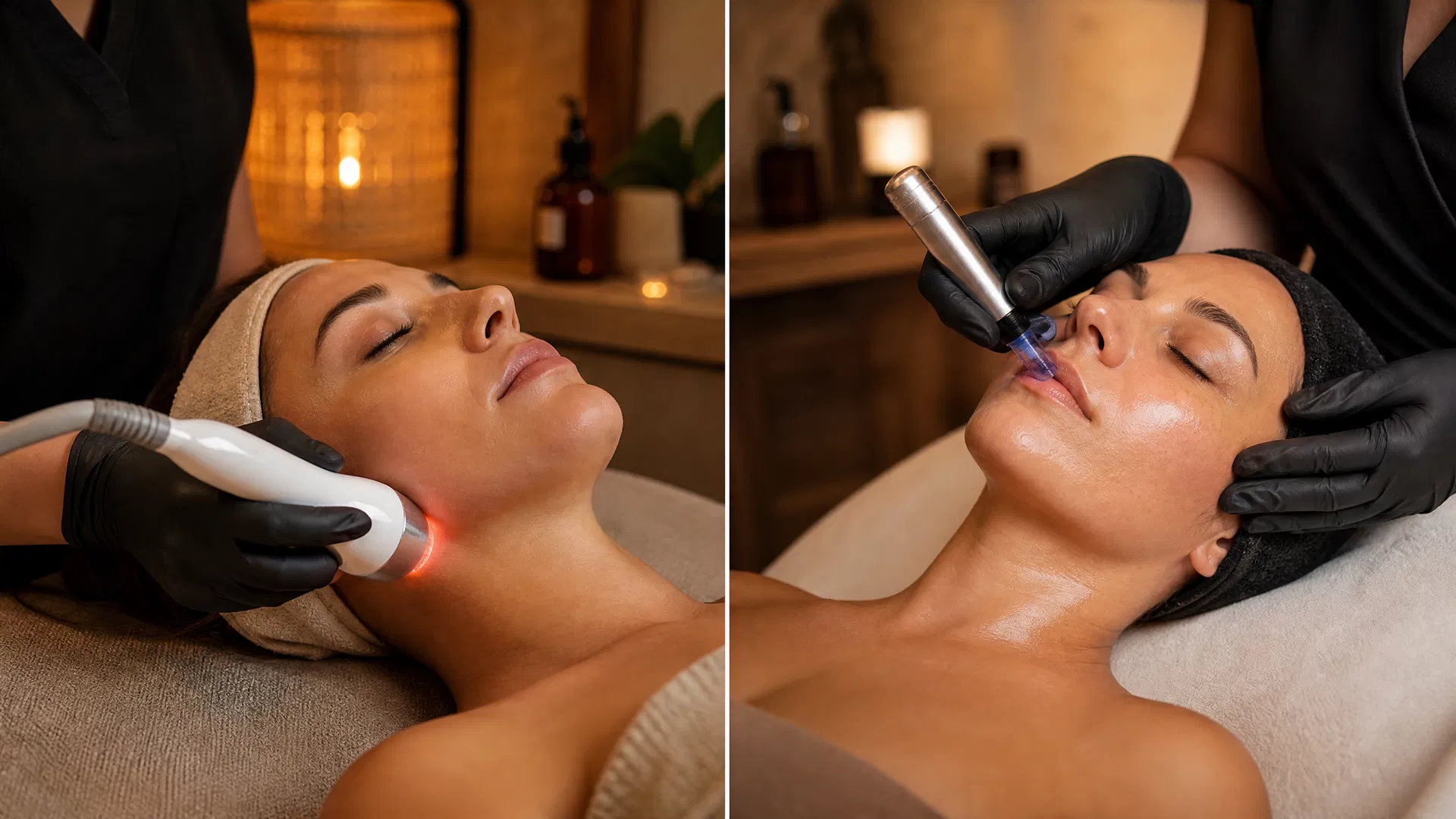
RF Skin Tightening vs. Microneedling: Which One Is Right for You — and Why the Combination Is Better Than Either Alone