Microneedling vs. Chemical Peels: Which Is Right for Your Skin?
Both treatments can improve texture, tone, and visible signs of aging, but they work in different layers of the skin. Here is a practical way to compare them with your provider.
Microneedling and chemical peels are often mentioned in the same conversation because both can help improve the look of uneven texture, dullness, fine lines, discoloration, and acne scarring. They are not interchangeable, however. One uses controlled micro-injuries to stimulate the skin's repair response; the other uses a professionally selected solution to exfoliate targeted layers of skin.
The better choice depends on your concern, your skin history, your tolerance for downtime, and the plan your qualified provider recommends. This guide is general education, not a substitute for an in-person skin assessment.
The Short Version
Microneedling is usually the conversation to have when texture, acne scars, enlarged pores, or gradual collagen support are the main priorities. Chemical peels are often considered for surface-level concerns such as dullness, uneven tone, and certain forms of discoloration. Both require thoughtful screening and aftercare.
| If your main concern is… | A provider may discuss… | |---|---| | Acne scars, pores, or uneven texture | Microneedling | | Fine lines and gradual skin-firmness support | Microneedling | | Dull-looking surface skin or uneven tone | A professionally selected chemical peel | | Sun-related discoloration or melasma | A personalized assessment; the right option varies by skin type and history | | You are unsure | A consultation before choosing either treatment |
Finding this useful?
Share it with someone who needs to read it.
How Microneedling Works
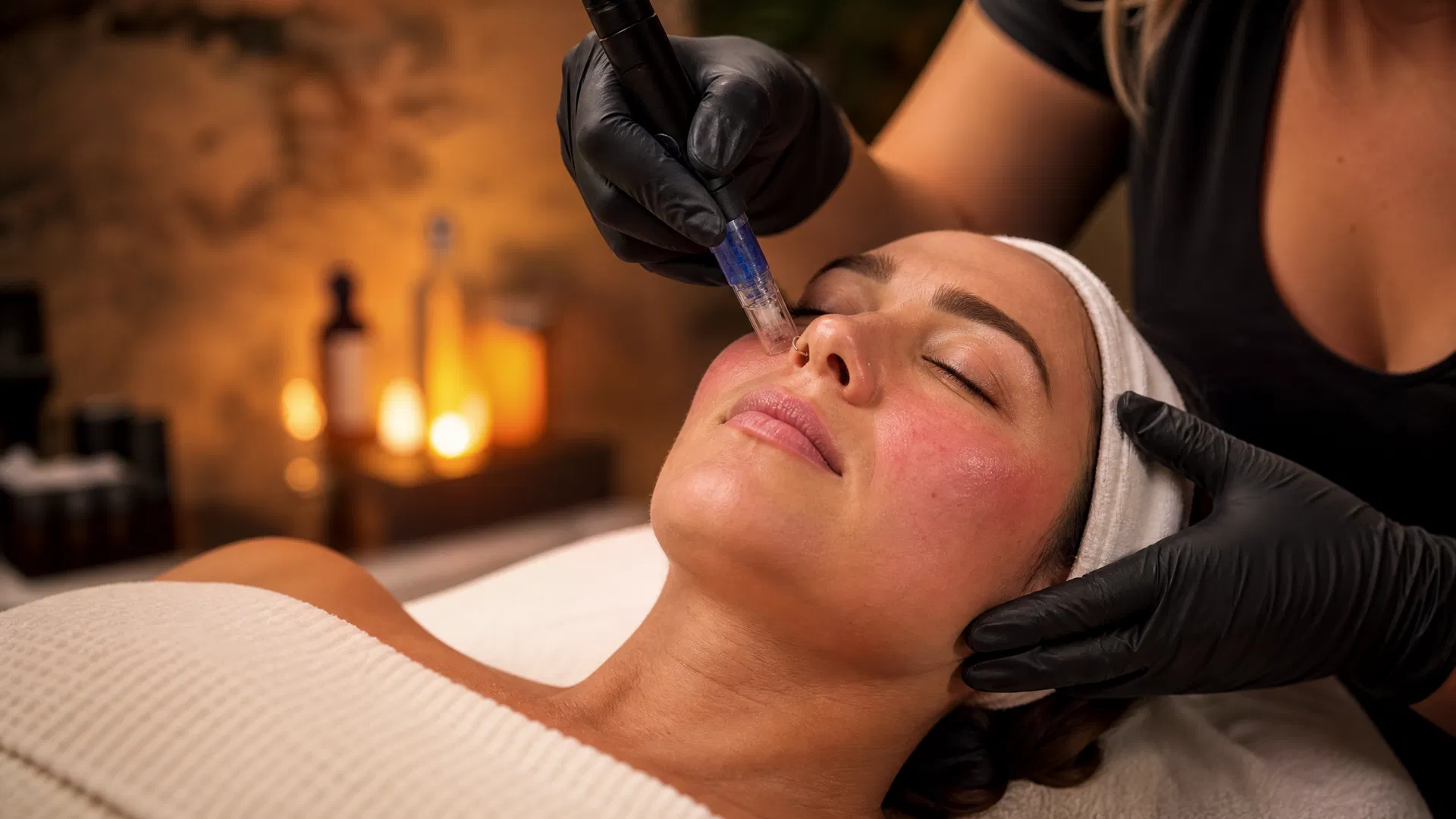
Microneedling uses a device with fine, sterile needles to create controlled micro-channels in the skin. That process prompts a wound-healing response associated with collagen and elastin remodeling. It can also help certain topical products penetrate more effectively when they are chosen and applied by a qualified professional.
Microneedling is commonly discussed for texture, acne scars, visible pores, fine lines, and uneven skin quality. A series is often recommended because collagen remodeling is gradual. Temporary redness and sensitivity are common after treatment, and the appropriate depth, spacing, and aftercare should be individualized.
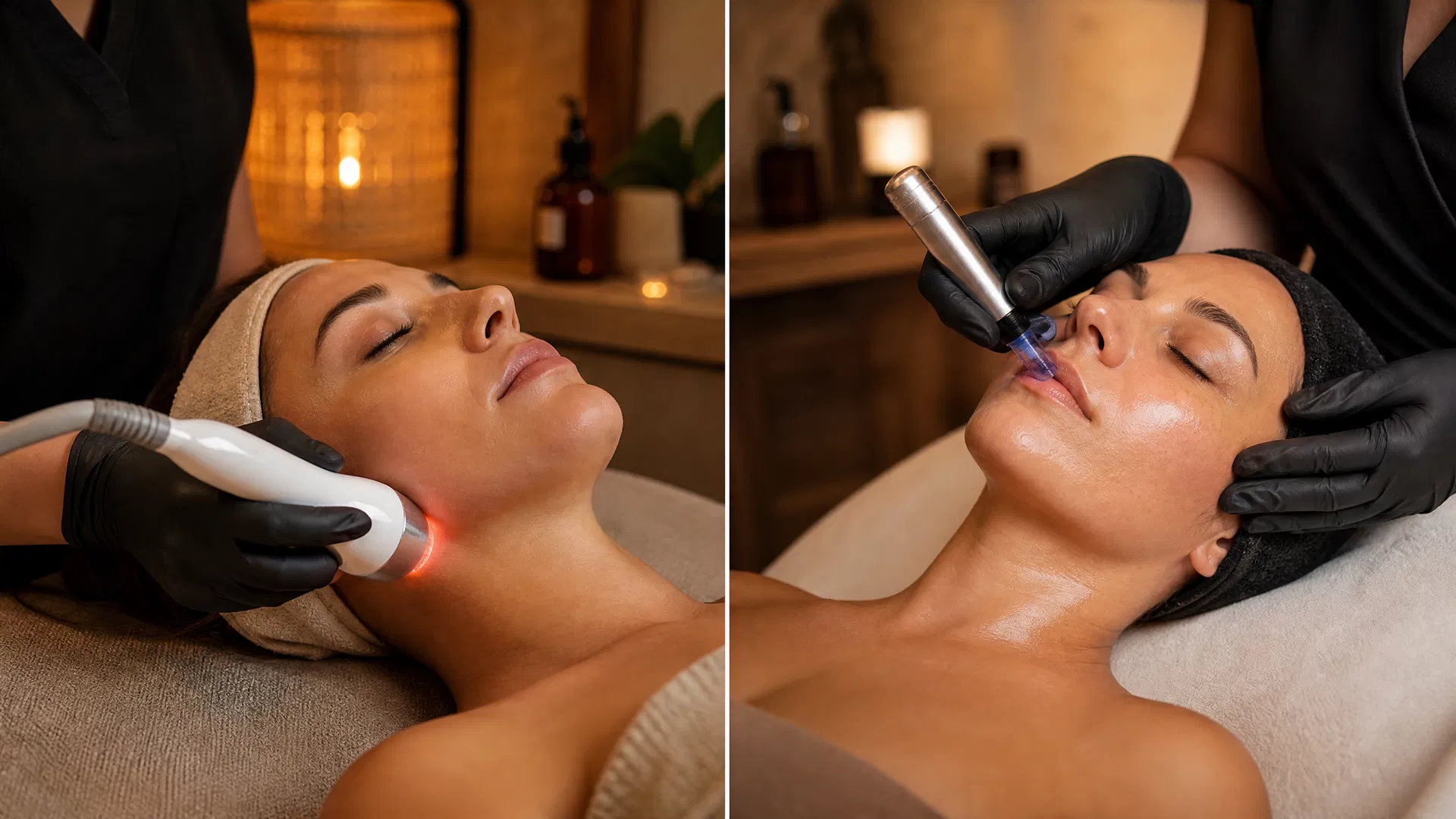
At Body Techs, every microneedling appointment includes complimentary red light therapy. Clients can also schedule a complimentary no-contact Cryo Facial for the following day to support a calmer recovery experience after their provider-approved treatment plan.
How Chemical Peels Work
Chemical peels use a solution to create controlled exfoliation. Peels vary substantially: a light peel may have limited visible downtime, while medium and deep peels can require more intensive aftercare and a longer healing period. The [American Academy of Dermatology](https://www.aad.org/public/cosmetic/younger-looking/chemical-peels-overview) notes that chemical peels can be used for concerns including dullness, uneven tone, fine lines, acne, discoloration, and sun-related changes, but the right depth and formula depend on the individual.
Because formulation, concentration, skin type, and recent skin-care routines all matter, a chemical peel should be selected and supervised by an appropriately licensed and trained provider. The [FDA specifically warns](https://www.fda.gov/drugs/drug-safety-and-availability/fda-warns-against-purchasing-or-using-chemical-peel-skin-products-without-professional-supervision) against using strong at-home chemical peels without professional supervision.
Downtime: The Practical Difference
Neither treatment has one universal recovery timeline. With microneedling, visible redness and a tight or warm feeling are common in the first day or two. With chemical peels, recovery depends heavily on the peel depth. A light peel may involve mild redness or flaking, while medium and deep peels require more involved healing and strict sun protection.
The most useful question is not “Which treatment has no downtime?” It is “What level of recovery fits my calendar, my skin, and the result I am trying to achieve?” Your provider should clearly explain what to expect before you commit.
Skin Tone, Pigment History, and Safety
Anyone considering either procedure should share their full skin history, including melasma, post-inflammatory hyperpigmentation, active acne, eczema, cold sores, recent tanning, medications, and prior reactions. Pigment changes can be a particular concern for some skin tones and conditions, so one-size-fits-all recommendations are not appropriate.
A [2025 comparative study of moderate-to-severe melasma](https://pmc.ncbi.nlm.nih.gov/articles/PMC12790136/) found improvement with both microneedling and a 15% TCA peel protocol, but the specific study design, products, and patient population do not make either treatment universally “best.” That is why an assessment matters more than a trend or a social-media recommendation.
Questions to Ask Before You Choose
Bring these questions to your consultation:
- What concern are we targeting first: texture, scars, tone, pigment, or laxity?
- What treatment depth or formula is appropriate for my skin history?
- What preparation, aftercare, and sun protection will I need?
- What is a realistic number of treatments and time horizon?
- Are there reasons I should postpone treatment or seek dermatology care first?
Where Body Techs Fits In
Body Techs offers microneedling as part of a broader esthetics and recovery experience in Minnetonka. If your primary goals are texture, acne scars, pores, fine lines, or a collagen-supporting skin plan, start with a microneedling consultation. If a chemical peel may be more appropriate for your needs, a qualified skin professional can help you determine the safest next step.
The right treatment is the one that respects your skin, your goals, and your ability to follow the recovery plan—not necessarily the one with the most dramatic promise.
Body Techs Wellness & Esthetics · 11353 MN-7, Minnetonka, MN 55305 · bodytechsrx.com
Found this helpful?
Share it with someone who needs to read it.
Ready to experience the difference?
Book your first session at Body Techs Wellness & Esthetics in Minnetonka, MN.
Book NowMicroneedling for Your Face: What to Expect, How It Works, and Why It Actually Delivers
Microneedling Beyond the Face: Neck, Décolletage, Hands, and Body